
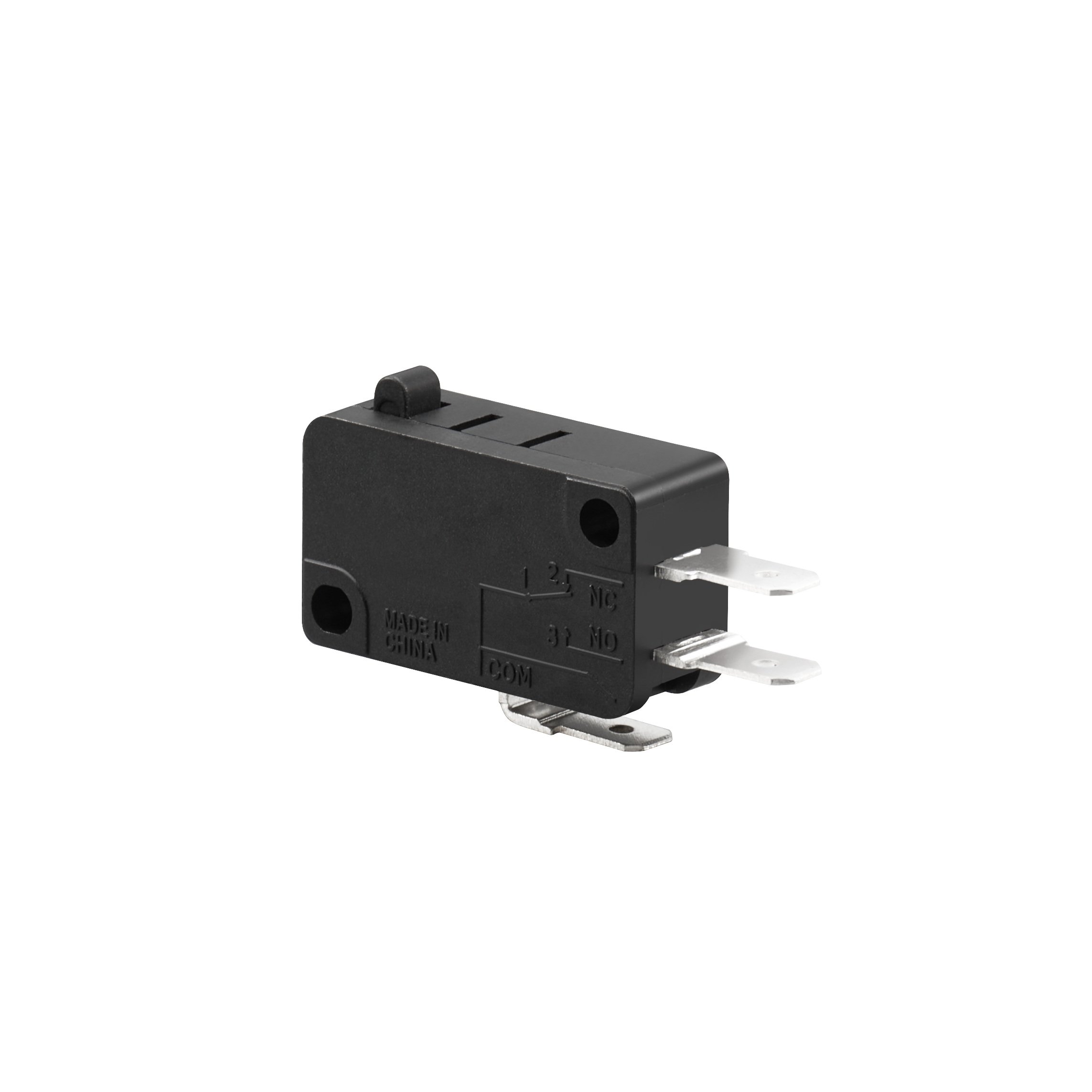
A micro switch, also known as a miniature snap-action switch, provides reliable electrical switching through a precision spring-loaded mechanism. WEUP micro switches deliver consistent performance across millions of operating cycles, serving applications from home appliances to industrial equipment.
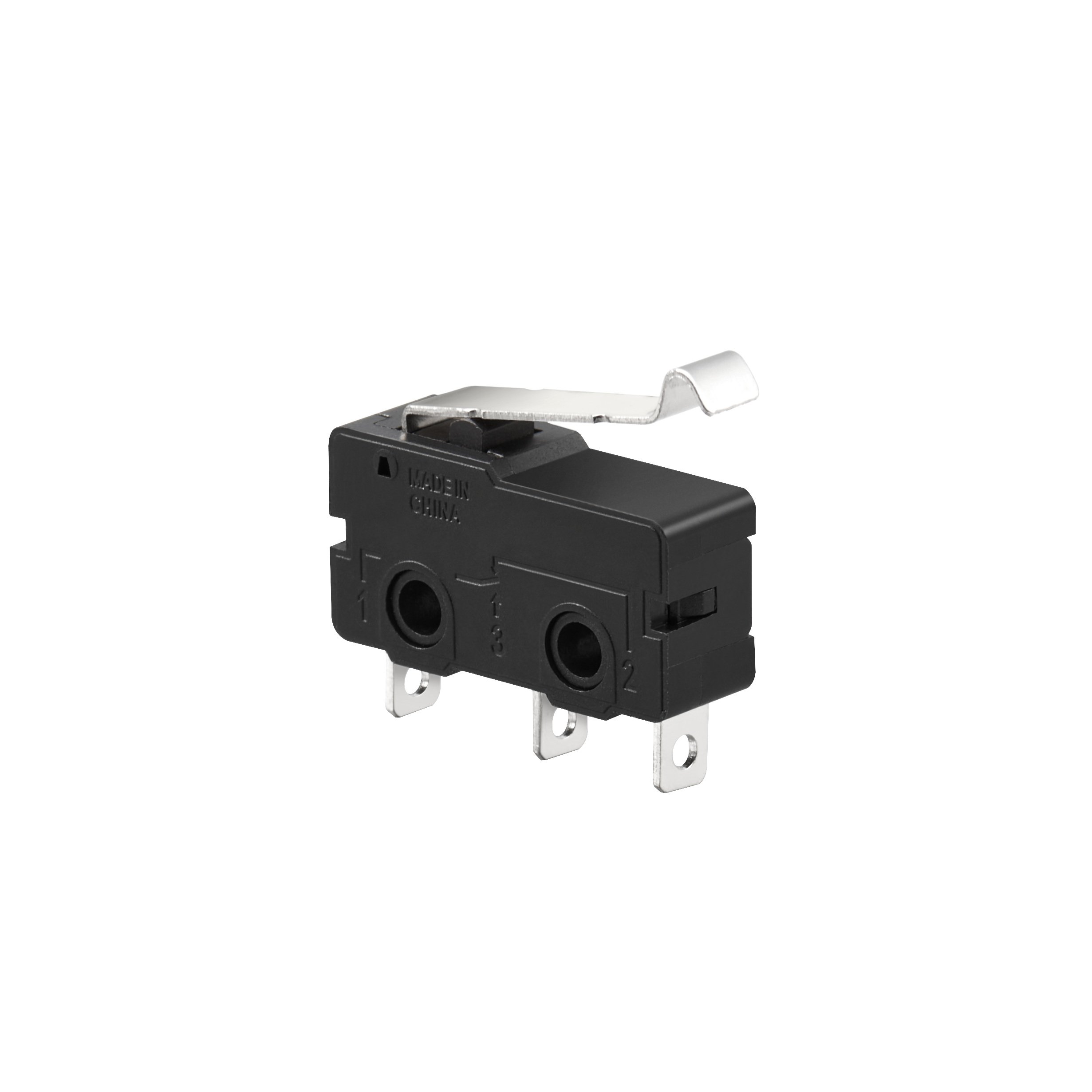
WEUP micro switches are available in V-106 series (10A) and V-156 series (15A) configurations, with SPDT, SPST-NO, and SPST-NC contact forms to match your circuit requirements. All WEUP micro switches carry CE, UL, and cUL certifications for global market access.
How Micro Switches Work
A micro switch uses a spring-loaded mechanism to provide snap-action contact movement. When the actuator travels a precise distance, the spring tension suddenly releases, causing the contacts to snap between positions with remarkable speed. This snap-action prevents contact arcing and ensures clean, reliable switching throughout the switch lifecycle.
The defining characteristic is the differential travel—the small distance between the operating point and the release point. This feature provides precise switching without the gradual transition that would cause contact damage in high-current applications.
According to IEC standards, micro switches intended for industrial applications should meet specific dielectric strength and operating life requirements to ensure reliable performance in demanding environments.
WEUP Micro Switch Product Range
V-106 Series (10A Micro Switches)
The V-106 series provides 10A switching capacity at 250V AC, suitable for most general-purpose micro switch applications. Available configurations include:
- V-106-1C4 (SPDT) – changeover contact for circuit routing
- V-106-2C4 (SPST-NC) – normally closed contact for safety circuits
- V-106-3C4 (SPST-NO) – normally open contact for power switching
V-156 Series (15A Micro Switches)
The V-156 series delivers 15A switching capacity for higher current applications. The increased current rating makes these switches suitable for motor loads and other inductive loads that require greater contact survival during switching transients.
- V-156-1C5 (SPDT) – changeover contact configuration
- V-156-2C5 (SPST-NC) – normally closed for safety interlock
- V-156-3C5 (SPST-NO) – normally open for power control
Micro Switch Applications
Home Appliance Safety Interlocks
Micro switches serve critical safety functions in home appliances. Refrigerator door switches illuminate the interior light when the door opens and extinguish it when the door closes. Microwave door switches ensure the magnetron cannot operate when the door is open. Washing machine lid switches prevent operation while the lid is open.
Under UL safety standards, appliances must include safety interlocks that prevent operation under hazardous conditions. Micro switches provide the reliable position sensing that these safety systems require.
Industrial Equipment Limit Switches
Conveyor systems, CNC machines, and other industrial equipment use micro switches as limit switches to detect machine position and prevent overtravel. When a machine part reaches its limit position, it actuates the micro switch, which signals the control system to stop or reverse motion.
NEMA standards define requirements for industrial control equipment including limit switches. WEUP micro switches meet or exceed these requirements for industrial environments.
HVAC and Building Controls
Heating and cooling systems use micro switches in thermostat housings, air filter change indicators, and ductwork pressure switches. The compact size of micro switches enables installation in space-constrained locations within HVAC equipment.
Selecting the Right Micro Switch
Consider Contact Form
SPST-NO (normally open) switches are appropriate for circuits that should be closed when the switch is actuated. SPST-NC (normally closed) switches serve safety applications where breaking the circuit stops the load. SPDT switches provide changeover capability for circuit routing applications.
Consider Current Rating
Select a current rating that provides adequate margin above your load current. For resistive loads, a 125% margin above running current is typically sufficient. For inductive loads including motors and relays, a 150-200% margin is recommended to handle switching transients.
Consider Actuator Type
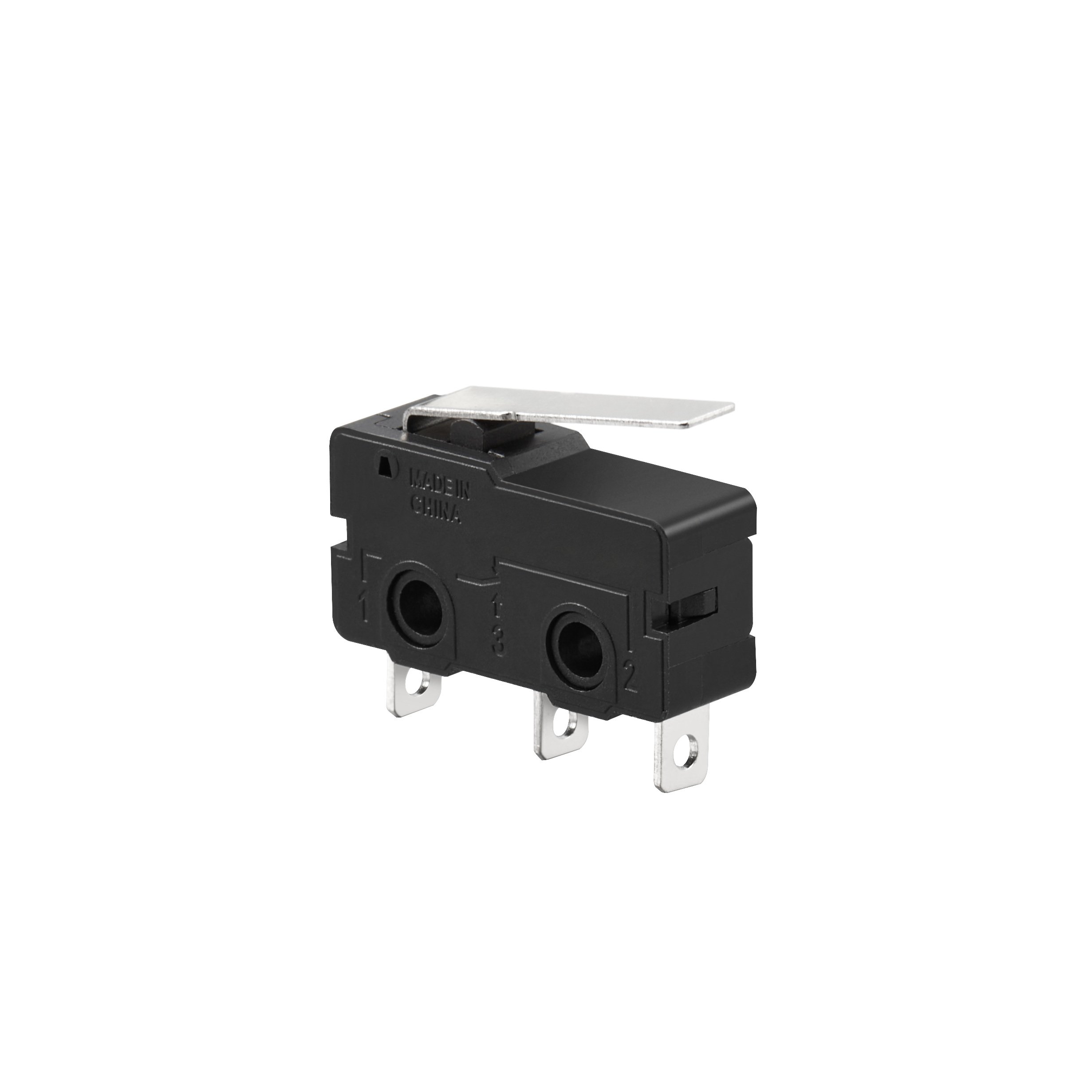
WEUP micro switches accept various actuator configurations to match your mounting requirements. The actuator type affects operating force, travel distance, and mounting geometry.
WEUP Micro Switch Certifications
All WEUP micro switches carry comprehensive certifications supporting global market access:
- CE marking – European Union compliance for products sold in EU member states
- UL listing – Underwriters Laboratories standards for North American safety
- cUL certification – Canadian standards requirements for the Canadian market
These certifications verify that WEUP micro switches meet relevant safety and performance standards for their intended applications.
Related WEUP Products
Beyond micro switches, WEUP offers a comprehensive range of electrical switches for industrial applications:
- Push Button Switches – momentary and latching configurations for control panels
- Rocker Switches – KCD series rockers for power switching
- Toggle Switches – SPST, SPDT, DPST, DPDT configurations
- IEC Connectors – C13, C15, C19 power cord connectors
Contact WEUP
WEUP micro switches combine precision engineering with manufacturing expertise to deliver reliable switching for your applications. Contact our engineering team to discuss your micro switch requirements or to request samples for evaluation.