
Multi-pole switch configuration · 3PST
3PST Switch
A 3PST switch opens or closes three electrically separate paths with one actuator. Use this page to inspect a real WEUP triple-rocker example and prepare a clear three-circuit sourcing request.
- 3 independent poles
- 1 switched path per pole
- 1 shared actuator
Circuit function
What is a 3PST switch?
“Three pole” means three electrically separate circuits are controlled. “Single throw” means each pole has one switched output. A maintained 3PST actuator commonly turns all three paths ON or OFF together.
The shared actuator coordinates the motion, but the three poles remain electrically isolated. This can simplify an operator interface when three documented circuits must change state at the same time.
The configuration name does not define housing, rating or terminal style. Those details must be matched to the equipment and verified in the selected model drawing.
Real product references
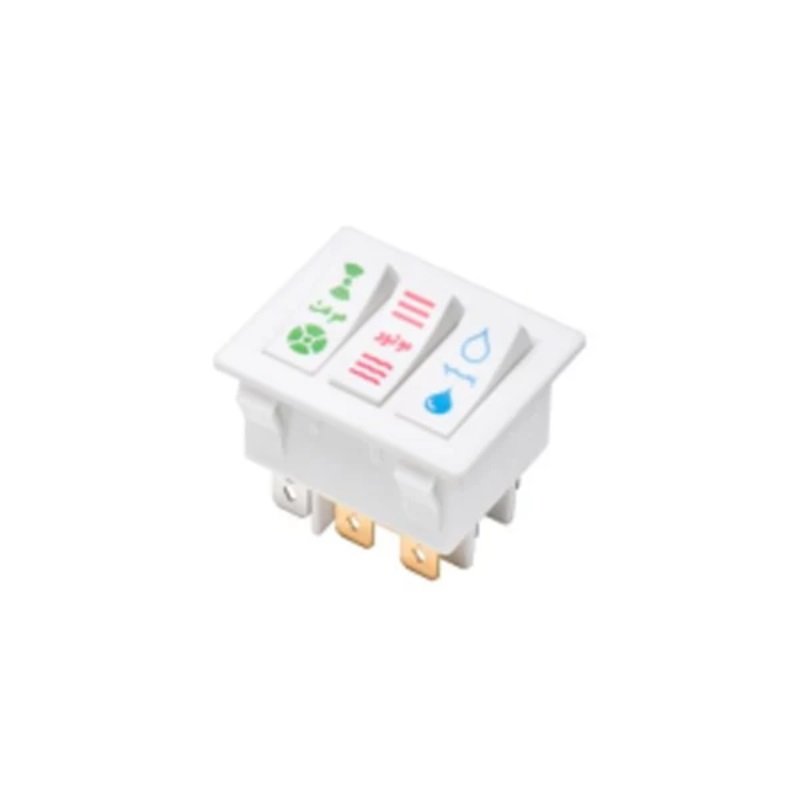
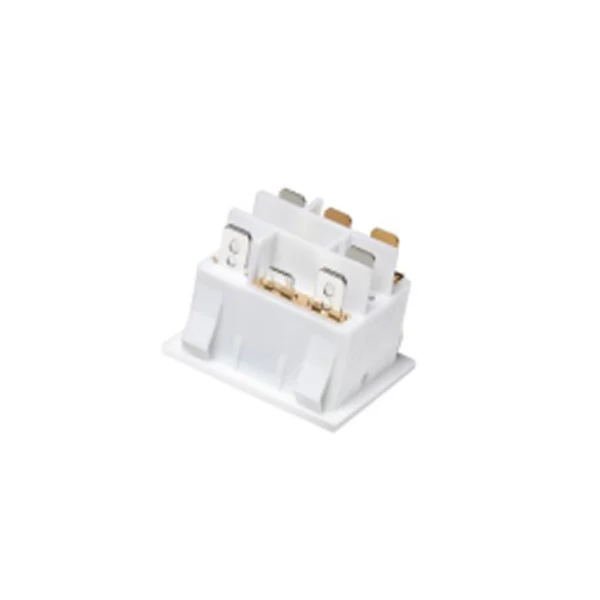
3PST visual references
These first-party media-library photos show one physical 3PST rocker format. Confirm the exact terminal map, action and rating from the selected model drawing.
Multi-pole comparison
3PST vs. other multi-pole configurations
Separate pole count, throw count and switch action before choosing the housing or actuator style.
| Configuration | Poles | Throws per pole | Control logic | Use when |
|---|---|---|---|---|
| 3PST | 3 | 1 | Three circuits ON/OFF together | Three isolated paths must follow one actuator |
| 3PDT | 3 | 2 | Three circuits change between two paths | Three coordinated changeover channels are required |
| 4PST | 4 | 1 | Four circuits ON/OFF together | Four isolated paths must follow one actuator |
| 4PDT | 4 | 2 | Four circuits change between two paths | Four coordinated changeover channels are required |
Related pages: 3PDT switch page, 4PST switch page, pole-and-throw guide.
Buyer checklist
How to specify the right 3PST switch
Multi-pole requirements need a complete circuit map. These checks keep one visual match from becoming a wiring or installation mismatch.
Three-circuit map
Identify all three isolated paths and show which conductors must open or close together.
Maintained or momentary action
State whether the actuator holds its position or returns when released.
Load on every pole
Provide voltage, current and load type for each circuit, including inrush where relevant.
Terminal orientation
Share the required terminal style, spacing, numbering and wiring-access direction.
Panel installation
Provide cutout, panel thickness, available depth and retention requirements.
Operator and environment
Describe markings, actuation feel, contamination, vibration and temperature conditions.
Application fit
Where 3PST switches are considered
Application fit depends on the complete circuit, load, mounting and operating environment—not the configuration name alone.
Three-path equipment isolation
Three documented conductors can be opened or closed together when the complete design is suitable.
Multi-function operator panels
One actuator can coordinate three related control paths in a compact panel format.
Appliance subassemblies
Linked three-path control where installation depth and terminal access are defined.
Machine control interfaces
A clear shared action for three isolated control or signal paths.
Lighting and accessory groups
Coordinated switching of three circuits when the switch and loads are compatible.
Custom rocker modules
Face markings, color and mechanical format can be discussed after the circuit is fixed.
Faster sourcing
What to send with your inquiry
A model drawing or current sample is the fastest reference. Otherwise, send the project facts below.
- Complete multi-pole circuit map
- Required switching action
- Voltage, current and load on every pole
- Terminal style and physical layout
- Panel dimensions and installation depth
- Operating environment
- Target quantity and schedule
- Existing drawing, photo or sample
FAQ
3PST Switch questions
What does 3PST mean on a switch?
3PST means three pole, single throw. Three isolated electrical paths open or close together under one actuator.
How is 3PST different from 3PDT?
3PST provides one switched path per pole for coordinated ON/OFF control. 3PDT lets each of three poles change between two outputs.
Does a 3PST switch always use six terminals?
A basic non-illuminated contact set may use two switching terminals per pole, but the exact terminal count and arrangement must be verified for the selected model.
Can the three poles carry different loads?
Only when every pole and the complete switch are suitable for the specified circuits. Provide the load details for all three paths.
What should a 3PST RFQ include?
Send the three-circuit map, action, loads, terminal style, panel dimensions, environment, quantity and any sample or drawing.
Need a 3PST switch matched to your project?
Share the circuit, action, loads, terminal layout and panel requirements. WEUP can use those details to discuss a suitable sourcing route.