


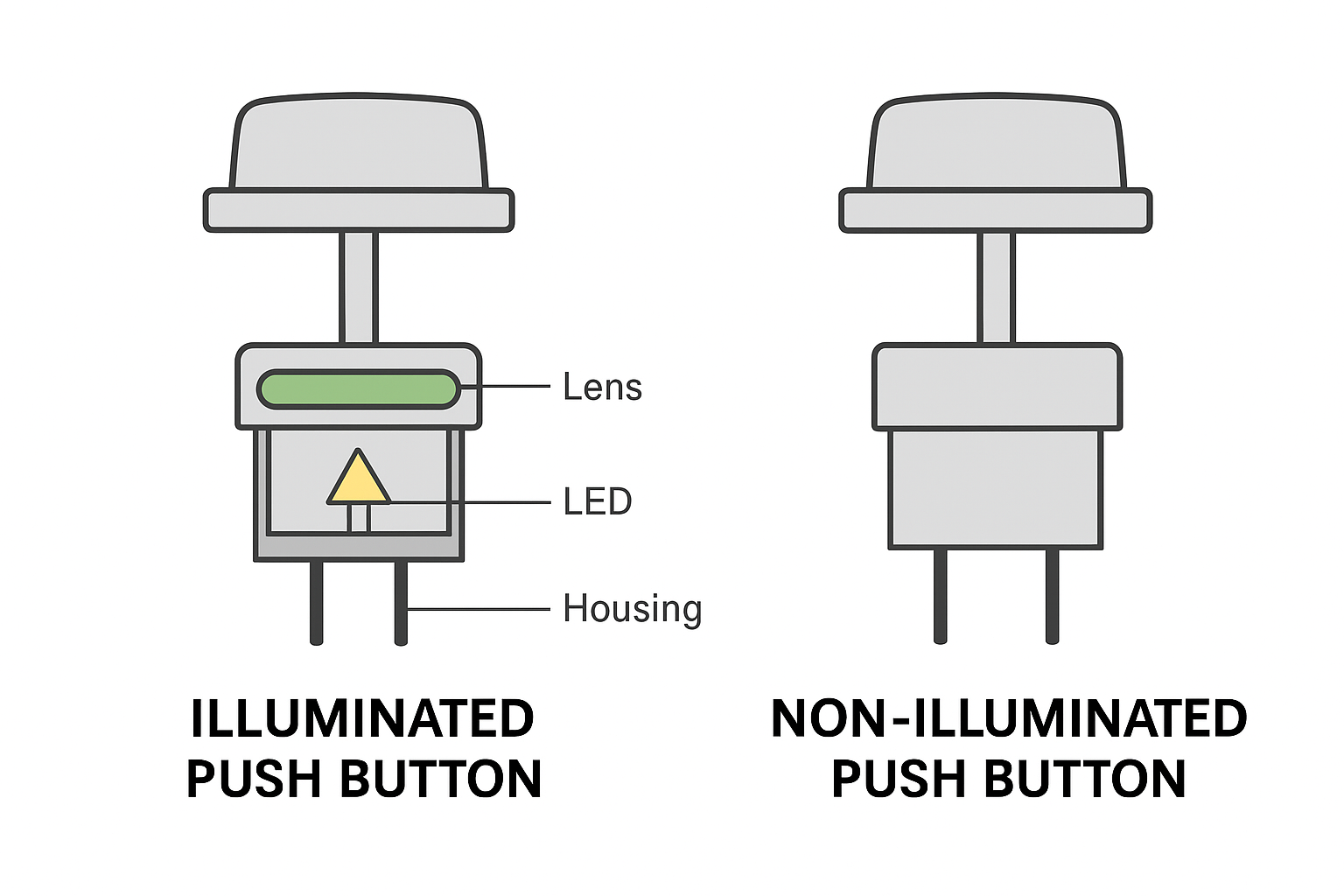
Push button switches are life-saving interfaces in emergency systems, offering rapid, reliable activation when seconds count. Their design and functionality directly impact safety outcomes across medical, firefighting, and public security applications.
🚨 Why Push Button Switches Are Essential
1. Immediate Response Activation
- One-Press Activation: Simplifies operation under stress (e.g., cardiac defibrillators, fire alarms).
- Tamper-Resistant Designs: Prevent accidental triggering in high-stakes environments.
2. Fail-Safe Reliability
- Sealed & IP-Rated Switches: Resist water, dust, and chemicals (e.g., IP67 for fire trucks, ambulances).
- Redundant Circuitry: Backup contacts ensure function even with partial failure.
3. Universal Compliance
- Meets NFPA, IEC, and UL Standards: Critical for emergency equipment certification.
⚡ Key Applications in Emergency Services
| Application | Switch Type | Purpose |
|---|---|---|
| Hospital Crash Carts | Illuminated Mushroom (Emergency Stop) | Instant power cutoff for patient safety |
| Fire Alarm Pull Stations | Momentary Push-to-Break | Triggers building evacuation alerts |
| Ambulance Defibrillators | Tactile Medical-Grade | Delivers shocks with minimal delay |
| Police Vehicle Lights/Sirens | Latching Sealed Switch | Ensures sustained activation during pursuits |
| Industrial Emergency Shutdown (ESD) | Dual-NC Contacts | Halts machinery to prevent injuries |
🔧 Design Features for Emergency Use
- Color-Coding: Red (stop), Green (start), Yellow (caution) per ISO 3864.
- High-Visibility Actuators: Glow-in-the-dark or LED-backlit buttons for low-light conditions.
- Anti-Vandal Construction: Metal housings resist blunt force (e.g., 16mm metal push buttons in prisons).
⚠ Risks of Non-Compliant Switches
- Slow Response Times: Cheap switches may stick or lag during crises.
- Corrosion Failures: Non-hermetic seals lead to malfunctions in humid/outdoor settings (e.g., marine emergencies).
- Electrical Noise: Poor EMI shielding can disrupt sensitive equipment (e.g., hospital ECG machines).
✅ Best Practices for Emergency System Integrators
- Prioritize Tactile Feedback: Audible “click” and haptic response confirm activation under stress.
- Test Under Simulated Conditions: Validate switches with vibration, temperature, and spill tests.
- Document Maintenance Logs: Replace switches per manufacturer’s lifespan recommendations (e.g., 50,000+ cycles for high-use panels).
🛠 Real-World Example: Defibrillator Switch Failure
A 2018 FDA recall involved AEDs (Automated External Defibrillators) with faulty membrane switches that delayed shock delivery. Post-recall models adopted tactile metal buttons with moisture-resistant seals.
Lesson: Switches in emergency devices must exceed general-use durability standards.
📢 Industry Outlook
- Voice-Activated & Gesture Controls are emerging, but physical push buttons remain critical for unconditional reliability.
- IoT Integration: Smart switches now transmit diagnostics (e.g., “Alarm Button #3 Needs Service”).
Need help selecting EMT-grade switches? Share your operating environment for tailored recommendations! 🚑🔌