Understanding Toggle Switches
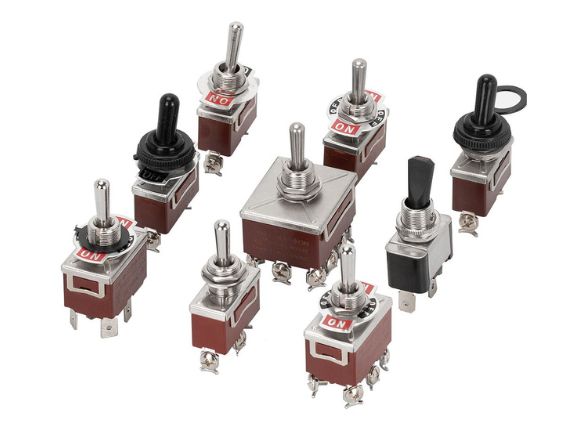
A toggle switch is an electrical device that operates using a mechanical lever or handle to open or close a circuit. This straightforward yet efficient tool is popular due to its reliability and ease of use, making it a common feature in both consumer and industrial settings. Toggle switches are available in different configurations, tailored to meet specific operational requirements and control various circuits.
To better understand toggle switches, it’s essential to recognize the different types available, each distinguished by the number of positions and circuits they manage:
- SPST (Single Pole Single Throw): This is the simplest type of toggle switch, allowing control of a single circuit, functioning as a basic on/off switch.
- SPDT (Single Pole Double Throw): This switch can connect one circuit to one of two possible paths, facilitating more versatile control.
- DPST (Double Pole Single Throw): Similar to the SPST, but controlling two circuits simultaneously, typically used for heavy-duty applications that require safety features.
- DPDT (Double Pole Double Throw): This switch can direct two circuits to one of two outputs, ideal for applications that need directional control, such as motors.
With this foundational knowledge, we can explore the various applications of toggle switches across different industries. In homes, they are often used for lighting and controlling appliances. The automotive sector utilizes them for battery management and other electronic features, while industrial environments frequently use toggle switches for machinery and equipment operation due to their robustness and dependability in challenging conditions. Understanding the different types of toggle switches and their applications enables users to make informed choices when selecting switches for their needs.
Essential Features of Toggle Switches
Having established a solid foundation of knowledge regarding toggle switches, it’s crucial to examine the features that significantly influence their functionality and suitability. Choosing the right toggle switch entails understanding several key specifications and characteristics vital for ensuring optimal performance and reliability in your application. Here are the essential features to consider:
- Voltage Ratings and Current Ratings: Selecting a toggle switch that meets the appropriate voltage and current ratings for your application is essential. Exceeding these ratings can result in failure or hazardous situations. Look for switches that clearly indicate their ratings, usually expressed in volts (V) and amperes (A).
- Sizes and Mounting Types: Toggle switches come in various sizes and mounting styles, including panel mount, PCB mount, or surface mount. Ensure that the switch fits within your design specifications and is compatible with your equipment layout.
- Durability and Material Considerations: Evaluate the build quality of the toggle switch, typically comprising materials such as plastic or metal for the toggle lever and housing. Choose switches designed for intense use if impact resistance or frequent toggling is anticipated.
- Environmental Factors Affecting Performance: Depending on your operational environment, you may require a toggle switch that offers water resistance, dust resistance, or the ability to function under extreme temperatures. Look for switches with ratings like IP (Ingress Protection) for water and dust resistance or temperature ratings suited to your working conditions.
Checklist of Key Characteristics to Look For:
- Voltage and current ratings
- Size compatibility and mounting style
- Material quality and durability
- Environmental resistance features
By carefully assessing these characteristics, you can select a toggle switch that not only meets your application needs but also guarantees long-term reliability and performance.
Product Comparison: Toggle Switch Types Explained
Building on our understanding of toggle switches, analyzing the variations among them is beneficial for making an informed selection tailored to your specific applications. This section provides a comparative analysis of four primary toggle switch types: SPST, SPDT, DPST, and DPDT.
| Type | Functionality | Pros | Cons | Typical Use Cases |
|---|---|---|---|---|
| SPST (Single Pole Single Throw) | Simple on/off functionality |
|
|
Basic circuits, lamps, and general on/off switches |
| SPDT (Single Pole Double Throw) | Switches between two circuits |
|
|
Sound systems, fans, and lights where multiple options are needed |
| DPST (Double Pole Single Throw) | Controls two circuits simultaneously |
|
|
Lighting systems and heavy machinery |
| DPDT (Double Pole Double Throw) | Switches between two circuits, controlling two loads |
|
|
Motor control, industrial applications, and complex devices |
In summary, selecting the appropriate toggle switch type involves evaluating the particular needs of your application against the outlined functionality, advantages, and drawbacks. Understanding these distinctions will assist you in choosing the most suitable toggle switch for your projects.
Buying Guide: How to Choose the Right Toggle Switch
Now that we have clarified the types of toggle switches available, we can turn our attention to the critical factors in selecting the right one for your project. Choosing the appropriate toggle switch will ensure functionality, durability, and compatibility. Here’s a comprehensive approach to guide you through the selection process:
- Assessing Project Requirements: Start by defining the specific needs of your application. Consider factors such as the type of device, operational environment, and desired control method. Will the switch be used for high-voltage systems or low-power applications? Clarifying these details is the first step to narrowing down your options.
- Evaluating Compatibility with Existing Systems: Ensure that the toggle switch you select can integrate effectively with your current setup. Check specifications, including voltage ratings and dimensions. Compatibility with connectors or existing wiring is also crucial to avoid modifications that might compromise performance.
- Identifying the Right Specifications Based on Use Case: Toggle switches come in a variety of configurations, such as SPST, SPDT, DPST, and DPDT. Familiarize yourself with these terms and choose a design that fits your intended use. Consider mechanical properties like switch actuation force and lifespan ratings to meet your operational demands.
- Future-Proofing Considerations: As technology advances, so may your requirements. Opt for toggle switches that allow for scalability and upgrades. Consider whether the switch can accommodate future expansions in your system, both in terms of physical space and electrical capacity.
To simplify your decision-making process, consider the following checklist:
- Define voltage and current ratings needed.
- Assess environmental factors (humidity, dust, temperature).
- Match the switch configuration to your control needs.
- Evaluate how the switch design fits into existing systems.
- Consider future requirements and upgrade pathways.
By thoughtfully considering these elements, you can select a toggle switch that not only serves your immediate needs but also withstands the test of time.
Frequently Asked Questions (People Also Ask)
As we further delve into toggle switches, addressing the prevalent inquiries regarding their functionality and application is essential. Toggle switches serve versatile roles in various applications, leading to numerous common questions. Below, we tackle some of the most frequently asked questions about toggle switches.
- What are the different types of toggle switches available?
Toggle switches are available in various types, including single pole single throw (SPST), single pole double throw (SPDT), and double pole double throw (DPDT). Each type differs in functionality, with SPST being the simplest, providing on/off control, while SPDT and DPDT switches offer additional positions for more complex circuits. - How do I choose the right toggle switch for my project?
To select the appropriate toggle switch, consider factors like the required voltage and current ratings, the type of load being controlled, and the physical space available for installation. Additionally, assess the desired actuation force and environmental conditions, such as moisture or dust exposure, to ensure durability and performance. - What are common applications for toggle switches?
Toggle switches are widely used in household appliances, automotive applications, industrial machinery, and equipment control panels. They are perfect for situations requiring reliable on/off control and are often utilized in lighting, fans, or power supply systems. - How do toggle switches differ from other switch types?
Compared to other switch types, such as push-button or rotary switches, toggle switches offer better tactile feedback and clear visual indications of their status (on/off). They are generally more robust, making them suitable for applications that require frequent switching or reliable operation in demanding environments. - What maintenance do toggle switches require?
Generally, toggle switches need minimal maintenance. However, it’s advisable to periodically inspect them for signs of wear or corrosion, especially in harsh conditions. Keeping contacts clean and free of debris can help maintain optimal performance and longevity.
Real-World Applications of Toggle Switches
With a thorough understanding of toggle switches and the questions surrounding them, we can now explore their practical applications in everyday scenarios. Toggle switches are versatile control devices widely adopted across diverse sectors, each fulfilling specific functions to enhance user experience and operational efficiency. Here, we examine some common real-world applications for toggle switches.
- Household Electronics: In the domain of home appliances, toggle switches are frequently found in devices such as lamps, fans, and kitchen equipment. Their straightforward operation renders them ideal for quickly turning appliances on or off, providing users with confidence and convenience. For instance, many traditional ceiling lights employ toggle switches to facilitate easy control from multiple points.
- Vehicles and Machinery: Toggle switches are critical in automotive and machinery applications. In cars, they are often used to operate functions like headlights, wipers, and power windows. Their durable design promotes reliability, making them suitable for heavy machinery, where they control essential functions like ignition and gear selection.
- Industrial Control Systems: In industrial contexts, toggle switches are indispensable for managing equipment and processes. They help regulate conveyor belts, automated assembly lines, and other machinery that necessitates simple on/off operation. By providing quick access, toggle switches reduce downtime and enhance safety measures in fast-paced environments.
As demonstrated, toggle switches are not only practical for household electronics but also essential in vehicles and industrial settings. Their adaptability to various uses highlights their important role in facilitating everyday operations.