
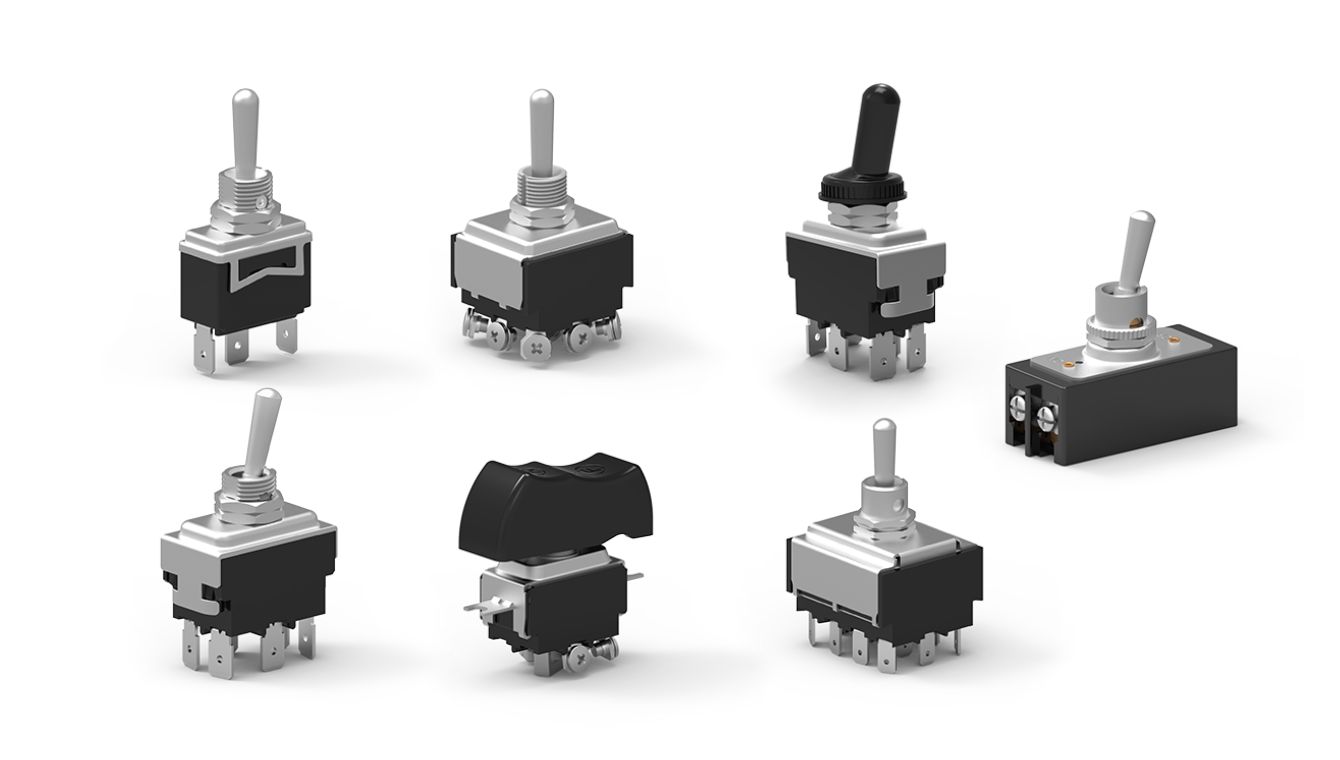
The design of the contacts inside toggle switches significantly influences their durability and performance through several key factors:
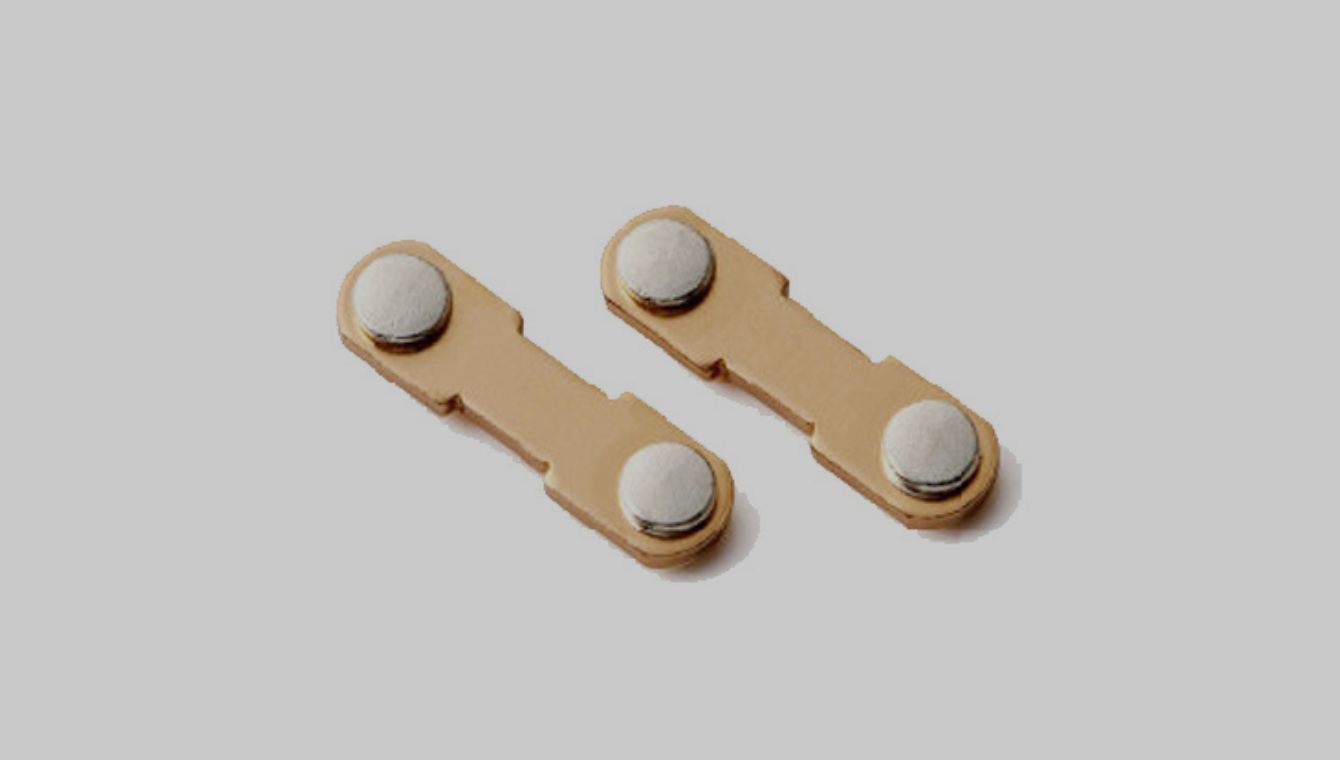
Material Selection:
Contacts are often made from highly conductive metals like copper alloys for good electrical and thermal conductivity, with contact surfaces commonly coated or made of precious metals such as gold, platinum, or silver for corrosion resistance and lower contact resistance. For example, gold offers low electrical resistivity, oxidation resistance, and good thermal properties, improving reliability in low-voltage circuits or where long inactivity periods occur. Platinum provides higher wear resistance and corrosion resistance, especially for heavy-duty contacts, but may increase contact resistance and manufacturing complexity.
Contact Size and Geometry:
The size and shape of contacts affect heat dissipation and mechanical wear. Typically, the movable contact is smaller and lighter to reduce inertia and wear, while the stationary contact is larger to act as a heat sink. A smaller movable contact size minimizes wear from repeated switching, maintaining better mechanical alignment and contact reliability over time. Contact designs such as circular shapes or multi-point contacts can improve lifespan and power handling by distributing wear and reducing hotspots.
Contact Interface and Alignment:
Designing one contact smaller so it fits within the perimeter of the other helps maintain alignment even after repeated use, reducing misalignment that causes wear and premature failure. The physical design ensures a stable connection and reduces contact surface degradation caused by mechanical debris or internal wear particles.
Thermal and Mechanical Considerations:
Electrical arcs and heat generated during switching can erode contacts, especially under high current. Good contact design manages heat buildup and arc duration to reduce erosion. Contacts designed to minimize arcing and dissipate heat increase lifespan.
Reliability Factors:
The presence of mechanical debris, non-conductive films, or oxidation on contact surfaces can impair electrical connection reliability. Contact design strives to prevent these issues by material choice and mechanical configuration.
In sum, the durability and performance of toggle switch contacts are strongly influenced by the selected contact materials, contact size and shape, alignment strategies, and heat/arc management design. Proper design reduces wear, improves thermal handling, maintains good electrical conductivity, and ensures reliable operation over many switching cycles.
If you want, I can provide more detailed examples of specific contact designs or materials used in different types of switches.